Why staying connected with aging parents matters
Regular connection with aging parents directly supports their emotional wellbeing, mental health, and sense of purpose. Research consistently shows that social isolation in older adults is linked to cognitive decline, depression, and reduced quality of life. Staying connected is not a nice-to-have — for many seniors, regular family contact is one of the most significant factors in how well they age.
For adult children and families, consistent connection also means being more aware of changes in a parent's health, mood, or circumstances. The families who talk to aging parents most regularly are often the ones who notice early warning signs and respond before problems become serious.
How ViewClix Keeps Families Connected Effortlessly
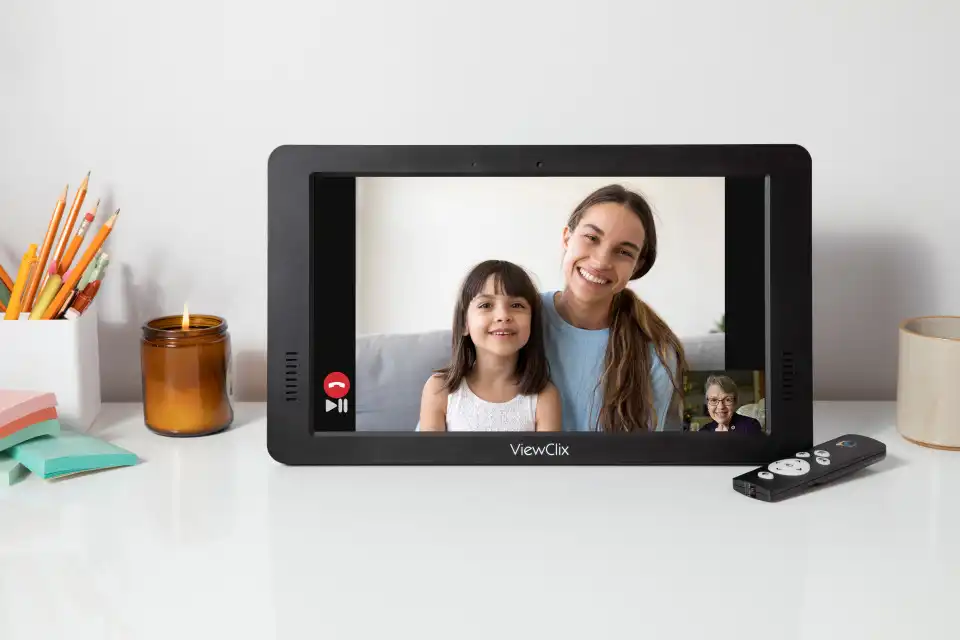
ViewClix is a smart frame designed specifically to maintain daily family connection with aging parents — without placing any technology burden on the senior. It displays family photos continuously throughout the day, keeping parents visually connected to their family even between calls. When family members want to talk, they start a call through the ViewClix app and the frame answers automatically — no buttons, no apps, no passwords for the parent to manage. Adult children control everything remotely, making daily connection sustainable even across long distances.
Explore ViewClix featuresCommon Challenges Families Face Staying Connected
Distance and infrequent visits
Many adult children live hours away from aging parents. Work schedules, family obligations, and travel costs limit how often in-person visits happen. Without supplementary digital connection, gaps between visits can stretch from weeks to months — leaving both parents and children feeling distant.
Technology barriers for seniors
Many aging parents are not comfortable with smartphones, video calling apps, or social media. When technology is the primary means of communication and parents struggle to use it, the burden of maintaining connection tends to fall entirely on the adult child — making regular contact feel like work rather than something natural and enjoyable.
Busy and unpredictable schedules
Adult children often juggle careers, children, household management, and other obligations simultaneously. Finding consistent time for regular calls with aging parents requires intentional effort and planning.
Parents who downplay their need for connection
Many aging parents are reluctant to ask for more contact or express loneliness. They may tell their children not to worry about calling frequently, even when they would genuinely benefit from more regular connection. Families who establish consistent, habitual contact — rather than waiting for parents to reach out — often find that parents are more engaged and happier.
Practical Ways to Stay Connected With Aging Parents
Schedule regular video calls
A weekly video call at a consistent time gives aging parents something to anticipate and helps families maintain connection without relying on spontaneous motivation. Face-to-face video is more personal than phone calls alone and allows families to see how parents look and feel. For guidance on accessible video calling options, see video calling for seniors.
Share photos throughout the week
A steady flow of family photos — school mornings, weekend activities, meals together — keeps aging parents involved in daily life even when visits are infrequent. Photos communicate that parents are thought of and included in everyday moments, not only on special occasions. Families can explore simple approaches in the guide on sharing photos with grandparents.
Use group messaging for ongoing updates
Family group chats give aging parents a stream of updates, photos, and conversations. This works well for parents who are comfortable with messaging apps. For parents less confident with technology, a dedicated device that receives photos automatically is a more reliable alternative.
Create routines and rituals
Consistent rituals — a Sunday morning call, a birthday video message tradition, a weekly photo of the grandchildren — give aging parents predictable moments of connection. These routines provide structure and something to look forward to.
Involve parents in family occasions remotely
Video calls during birthday dinners, holiday gatherings, and school events make aging parents feel present in family life even when they cannot attend. A device that is always on and ready in the living room makes this kind of spontaneous inclusion effortless.
Choosing the Right Technology to Stay Connected
Match the technology to the parent's abilities
The best technology is the one that actually gets used. For parents who are confident smartphone users, video calling apps and messaging work well. For parents who struggle with technology, devices that require little or no interaction — like ViewClix — are far more reliable for maintaining regular contact.
Prioritize tools that do not require technical management
Technology that requires frequent updates, password resets, or account management becomes a support burden for adult children over time. Purpose-built tools with minimal ongoing maintenance make staying connected sustainable.
Use one consistent method
Multiple apps, platforms, and communication methods create confusion for aging parents. A single, reliable method used consistently is always more effective than several methods used inconsistently.
For parents who find all technology challenging, tools like ViewClix make it possible to stay meaningfully connected every day without placing any demands on them. Families supporting a parent who lives independently may also want to compare communication tools for seniors living alone.
If your parent is willing to learn but needs a gentler starting point, the next step is guidance on helping aging parents use technology without making the process feel overwhelming.
How ViewClix works